
Understanding the UK Property Market

Freehold vs Leasehold
In the US, buying a house almost always means owning the property and the land beneath it outright. In the UK, it's not that simple. Freehold means you own both the building and the land indefinitely - this is broadly equivalent to what you're used to. Leasehold means you own the property for a fixed term (typically 99 to 999 years) but not the land itself. Flats and apartments are most often leasehold, and some houses can be too. Leasehold properties come with ground rent and service charges - costs that can add up significantly and which need careful scrutiny before you buy.
Short leases (under 80 years) dramatically reduce a property's value and can make mortgage lending difficult. Always check the lease length early. If it needs extending, factor the cost into your offer.
How Estate Agents Work - and Why It Matters
This is perhaps the most important difference for American buyers to grasp. In the UK, estate agents represent the seller - exclusively. They are paid by the seller and their job is to achieve the best price for the seller. There is no automatic buyer representation. You are, in effect, negotiating alone against a professional who is on the other side.
Buyers can hire a buying agent to represent their interests - but this is a separate engagement, paid for by the buyer. More on that in Chapter 3.
Properties are listed on major portals - Rightmove, Zoopla, and OnTheMarket are the main ones - but not all properties appear on all platforms, and a significant portion of the best properties never appear publicly at all.
Property Types: The UK Glossary
- Detached: A standalone house, broadly equivalent to a single-family home.
- Semi-detached: Shares one wall with a neighbouring property. Often feels more like a standalone house than a duplex.
- Terraced: Part of a row of joined houses - similar to townhouses or row houses.
- Flat: An apartment. Can be leasehold (usually) or share-of-freehold.
- Maisonette: A flat that occupies two floors of a building, usually with its own private entrance. Often feels more like a house than a flat, and frequently comes with outdoor space.
- Cottage: A small, often rural property with character features. No strict definition - it's more of a style than a type.
Offers, Pricing and Gazumping
Properties are typically marketed at a "Guide Price" or "Offers Over" - not a fixed price. Bidding can occur. Crucially, no agreement is legally binding until contracts are exchanged - which can be weeks or months into the process. Until that point, either party can walk away, and a seller can accept a higher offer from another buyer even after agreeing a price with you. This is called gazumping, and while frowned upon, it is legal.
The gap between a price quoted per square foot in the US and the UK can be startling - UK properties are often smaller than American equivalents, but 'price per sq ft' is a far less reliable guide in the UK countryside, where two adjacent properties can differ enormously in value. Context, condition, setting and history all matter far more.
Mortgages, Surveys and Tax
UK mortgages typically require a deposit of 10–20% or more, and fixed-rate terms are shorter - usually 2–5 years, after which you remortgage. US-style 30-year fixed mortgages do not exist here. As a foreign national, mortgage options may be more limited, making specialist broker advice essential.
There is no standard home inspection in the UK. You commission a building survey separately and independently - it is not part of the sale process by default. Skipping or skimping on this is one of the most expensive mistakes buyers make.
Stamp Duty Land Tax (SDLT) is a tax paid by the buyer on completion. Rates vary depending on purchase price, your residency status, and whether it is your only home. Budget for it - it is not insignificant. There is also a surcharge for buyers who are not UK residents at the time of purchase.
School Catchments
The UK school system is fundamentally different from the American one. State schools are free, but access is determined by catchment areas - you need to live within a defined geographical boundary to qualify for a place. Independent (private) schools are fee-paying and do not operate catchment boundaries in the same way - admission is based on assessment, interview and ability to pay fees, not on where you live. Where you live determines your state school options, which means school research should shape your property search from the start, not be left as an afterthought.
Essential Terminology for American Buyers
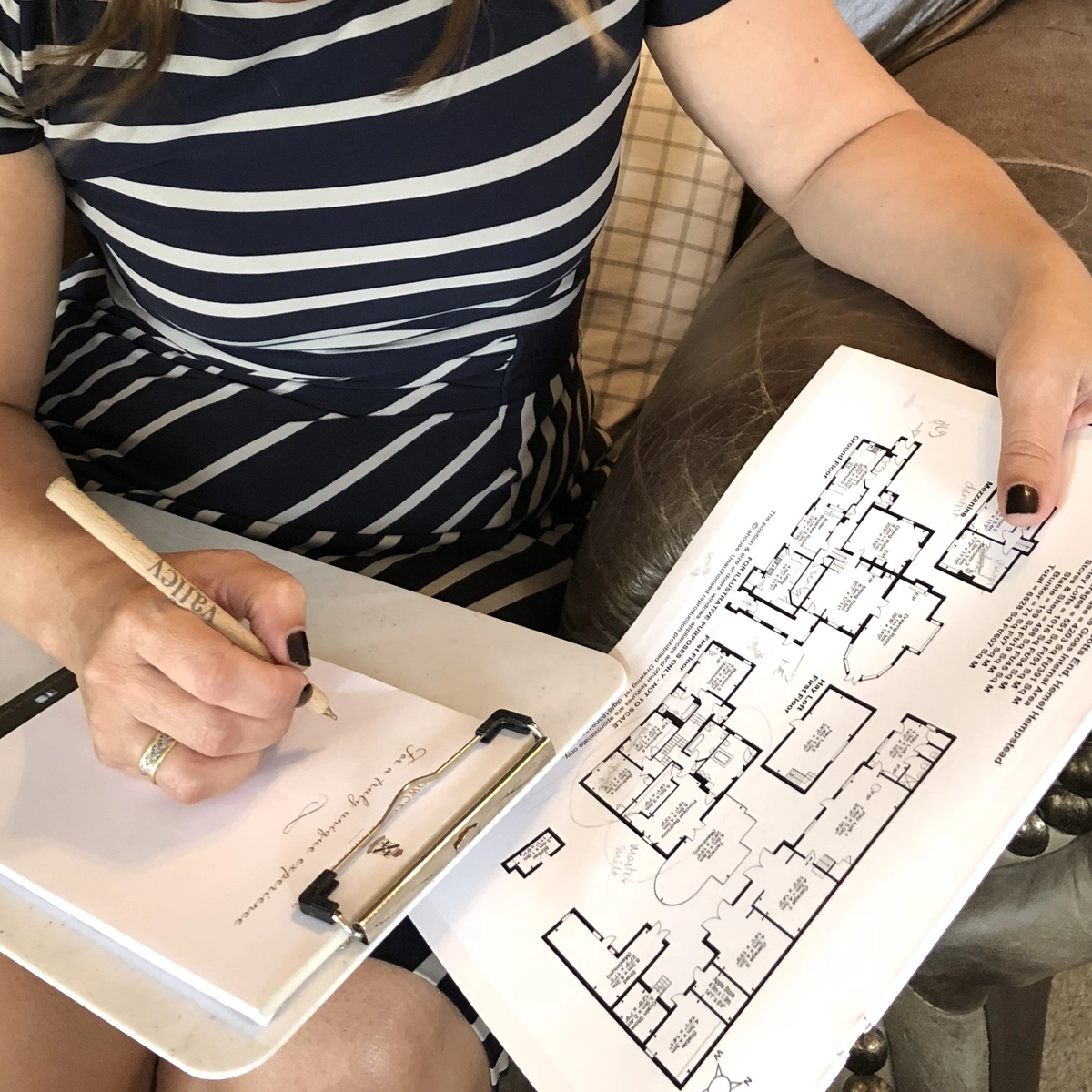
The UK property world has its own vocabulary. Here's the translation you need before your first viewing.
| US Term | UK Equivalent | What you need to know |
|---|---|---|
| Real Estate Agent | Estate Agent | Represents the seller only. Not your advocate. |
| Realtor / Buyer's Agent | Buying Agent | A separate hire, paid by the buyer. No automatic representation in the UK. |
| Attorney | Conveyancer / Solicitor | Handles the legal transfer of property. UK conveyancing has its own process and timeline. |
| Closing | Exchange & Completion | Two distinct steps, often weeks apart. Exchange is when the deal becomes legally binding. Completion is moving day. |
| Escrow | Solicitor's Client Account | Funds are held by lawyers, not an escrow company. Your deposit is usually 10% of the purchase price, paid on exchange. |
| Title Search | Local Authority Searches | Conducted by the buyer's solicitor. Reveals planning issues, road adoption status, flood risk and more. |
| Home Inspection | Building Survey | Commissioned separately by the buyer. Not automatically part of the process - you must arrange and pay for it yourself. |
| N/A | Stamp Duty (SDLT) | A tax paid by the buyer. Rates escalate with price and there is an additional surcharge for non-UK residents. |
| Contingent upon sale | Chain | UK sales are often linked - your vendor may be buying elsewhere, and their vendor too. Problems anywhere in the chain affect everyone. |
| Historic Places | Listed Building | Strict rules govern what you can alter. Grade I and Grade II listings carry significant legal obligations. Check before you fall in love. |
In the UK, nothing is legally binding until exchange of contracts. Until that moment, either party can withdraw without penalty (beyond losing survey and legal costs). This is different from the US system of earnest money deposits - and it's why the period between offer acceptance and exchange can feel precarious.
The Value of a Buying Agent

Estate agents represent the seller. A buying agent represents you. In a market that is unfamiliar, fast-moving and often opaque to outsiders, having someone in your corner is not a luxury - it is a strategic advantage.
Access before the market
Experienced buying agents know about properties before they're listed - or properties that never list at all.
Someone on your side
Estate agents are skilled negotiators working for the seller. A buying agent levels the playing field.
Due diligence
Flood risk, planning history, development threats, school catchments - a good buying agent investigates everything.
Negotiation that saves money
Stacks clients save an average of 2.5% on purchase price. On a £1m property, that's £25,000.
End-to-end project management
From first brief to moving day - managing solicitors, surveyors, agents and timelines so you don't have to.
Built for relocation
If you're buying from overseas, a buying agent becomes your eyes, ears and trusted guide on the ground.
We were not planning to use an agent to find us a home outside London… but it was the smartest decision we ever made. Rachel was an honest, steadfast and meticulous partner at every stage of our move. Her mediation skills made an otherwise complicated purchase process clear and positive for both parties. Rachel held on to the heart and head of our big step to leave London until we were ready to go. I am certain that if it wasn't for the Stacks service we would still be in ************ wondering if we would ever move - or we would have compromised and never realised the home of our dreams.
- Client moving to Buckinghamshire, UKA buying agent's fee is typically a percentage of the purchase price, paid on completion. Many clients find that between negotiated savings, avoided mistakes and time recovered, the fee pays for itself many times over. For overseas buyers especially, it is one of the best investments you can make in your move.
Life Beyond the Property
Visas and Immigration
There are no general restrictions on foreign nationals buying UK property. However, your visa status determines your right to live in that property - owning and residing are separate legal matters.
As a US citizen, you will generally need a visa to reside in the UK for more than six months. The type of visa depends on your circumstances - whether you're moving for work, retirement, family reasons, or as an investor.
- Skilled Worker Visa: If you have a UK job offer from an approved employer.
- Global Talent Visa: For leaders in academia, research, arts, digital technology or science.
- Investor / High Value Visas: Options exist for those bringing significant capital into the UK.
- Family Visas: If joining a British citizen or settled person.
- Retirement: The UK does not have a specific retirement visa - options are limited and specialist advice is essential.
Immigration law changes frequently and your circumstances are individual. Always seek specialist advice from a regulated UK immigration lawyer before committing to a property purchase. Don't rely on general internet research for something this consequential.
Financial Considerations

Relocating internationally involves significant financial complexity beyond the property price itself. You'll need to consider:
- Opening a UK bank account (often required before you can exchange contracts)
- Understanding the UK tax system, including whether you'll be taxed as a UK resident
- US tax obligations - Americans are taxed on worldwide income regardless of where they live, which creates reporting obligations even after you move
- Pension planning and what happens to US retirement accounts
- Managing assets across two jurisdictions
Navigating finances, legals and logistics across two countries is complex - but you don't have to find all the right people yourself. Rachel can introduce you to experienced specialists she trusts, including:
- Immigration specialists familiar with US-to-UK relocation
- Mortgage brokers experienced with overseas buyers
- Conveyancers who understand the complexities of international purchases
- Removals firms and storage companies with transatlantic experience
- US/UK cross-border tax and financial planning advisors
Currency Exchange
One of the most significant and underestimated costs of an international move is currency exchange. The rate at which you convert dollars to pounds can meaningfully affect how much property you can buy - and the timing of transfers can make a material difference to the final number.
Foreign Currency Partners
Whether you're new to sending money overseas or not, specialist help makes a real difference. Exchange rates move constantly, and precise timing can significantly affect the money available to you. Foreign Currency Partners offer:
- A dedicated account manager who takes time to understand your requirements
- Security as an FCA authorised Payment Institution with safeguarded accounts
- Competitive rates sourced from banks and specialist brokers
Get in touch with Rachel and she can make an introduction.
Settling In: Furniture Rental
Whether your belongings are crossing the Atlantic in a shipping container or you're starting fresh, there's often a gap between moving in and feeling at home. Furniture rental is a practical, flexible solution - giving you a properly furnished home from day one while you find your feet, source pieces you love, or wait for your own things to arrive.
Roomservice by CORT
Roomservice by CORT has been turning houses into homes for over 40 years, supplying high quality, comfortable and stylish rental furniture that people genuinely enjoy living with. With a choice of over 300 furniture styles and accessories, and rental terms from 1 month to 3 years, they can provide a solution whatever your requirements.
Get in touch with Rachel and she can make an introduction.
UK properties are often sold with some fixtures included and others not - what stays and what goes is negotiated as part of the sale. Curtains, light fittings, garden furniture and even kitchen appliances can all be subject to separate agreements. Your buying agent will ensure nothing is left ambiguous before you exchange.